A Thousand Stars: Episode III, Part 22
Mar. 21st, 2024 08:26 am![[personal profile]](https://www.dreamwidth.org/img/silk/identity/user.png) matril
matrilAnakin tries. He really does. He goes to tell Master Windu the truth about Palpatine. And Mace tells him to sit by himself and do nothing. Now, I don't believe he had any idea just how close to the edge Anakin is, or what a fatally wrongheaded decision this would turn out to be. I feel sorry for the guy. But leaving Anakin to brood -- essentially telling him he hasn't yet earned his trust -- yeah, it's not going to help the conflict brewing within this troubled Jedi.

Is there any more potent way to evoke Anakin's isolation and loneliness than this shot, making him so small and bereft?
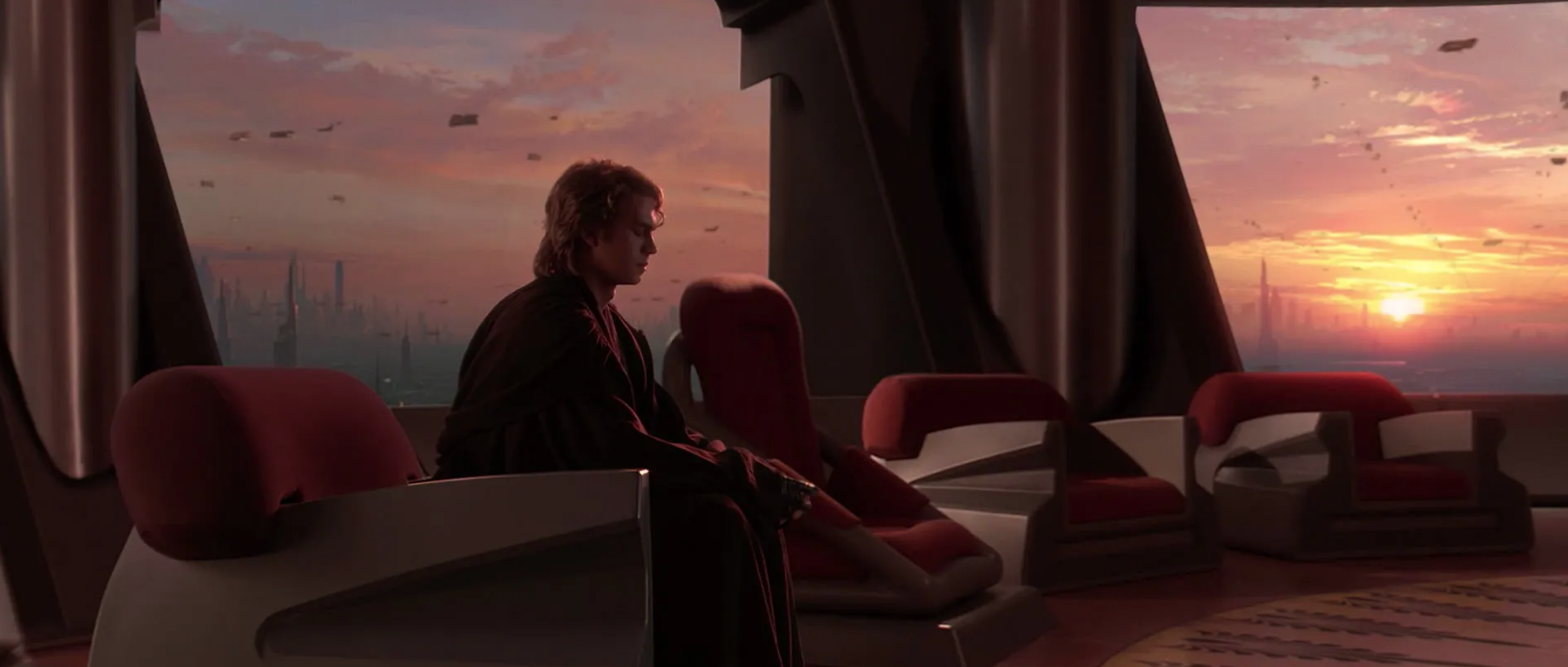
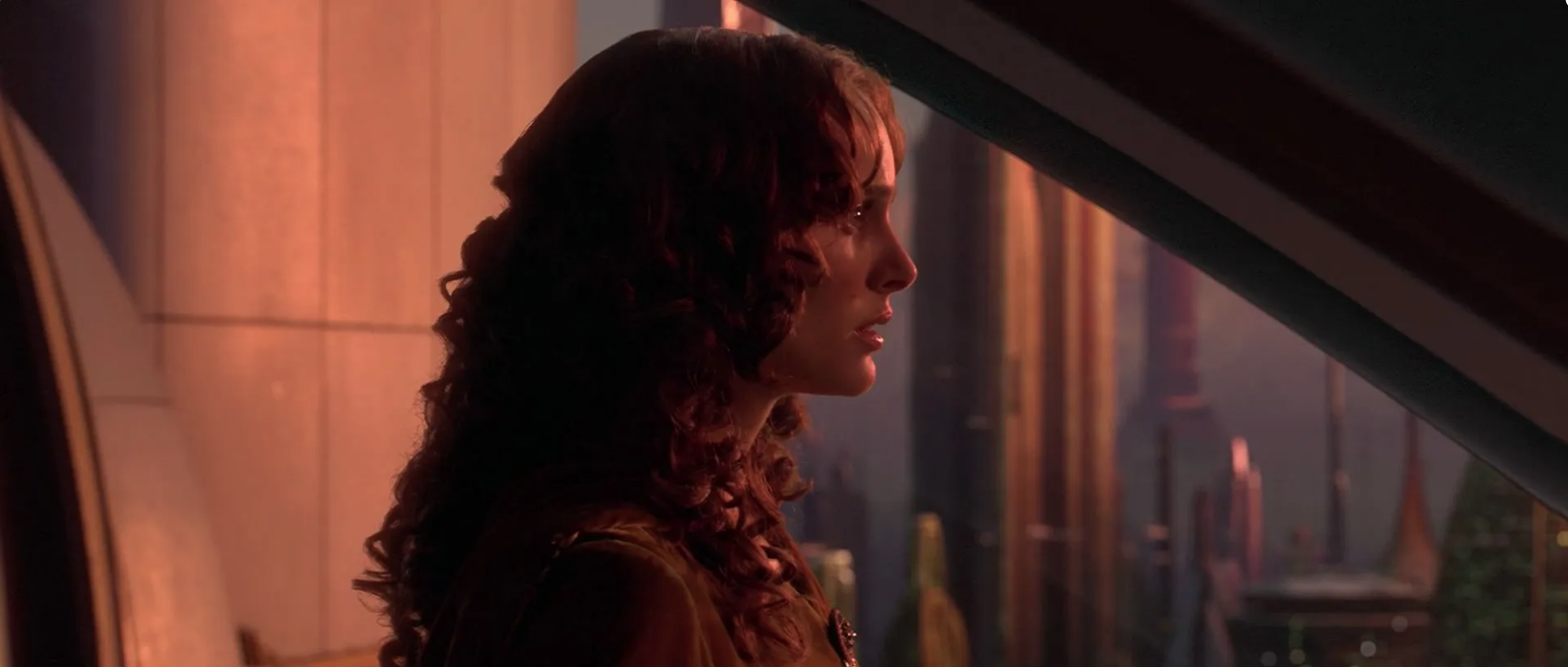
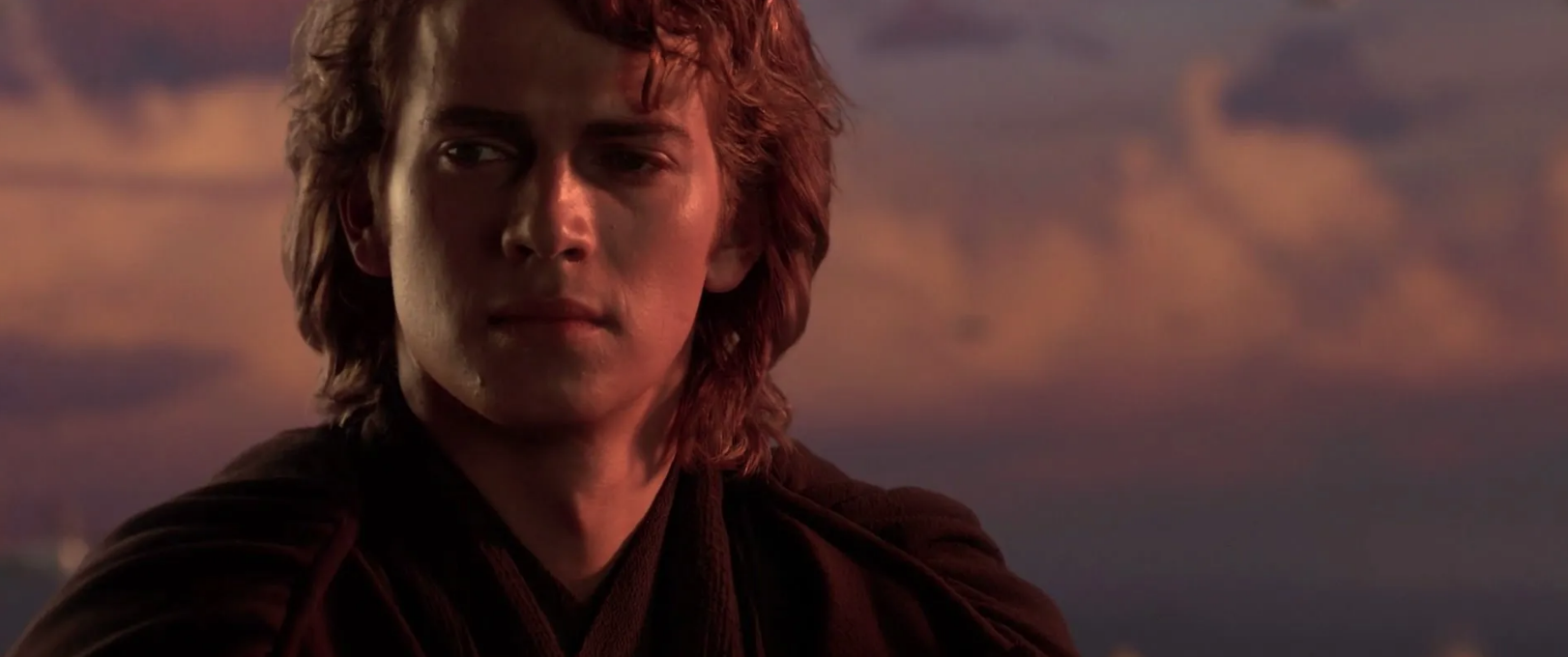
I appreciate that Lucas tweaked this sequence when it became clear that Anakin's motivations for turning weren't coming across as clear as he wanted. The silent exchange between the Council chamber and Padmé's apartment is exactly what we needed. And what a showcase of his artful use of cinematic language. Padmé and Anakin's shots are set up in mirrored parallels. A wide shot of her room and a close up of her face, followed by a wide shot of the chamber and a close up of his. Framed as if they're looking at each other even across the vast city. We need no dialogue, no complex explanations. While the eerie, mournful music heightens, we see these two fall into sync like two halves of a beating heart.
Here's just a few examples. (I would include every shot, but darn it all if I'm not running out of space for my images. I can't imagine why; I've only posted several hundred...)


In the end, when Anakin disobeys Windu's order and runs to meet his awful destiny, we know exactly what motivation lies at the heart of his decision. And all without a single word.
Next, a fateful duel...
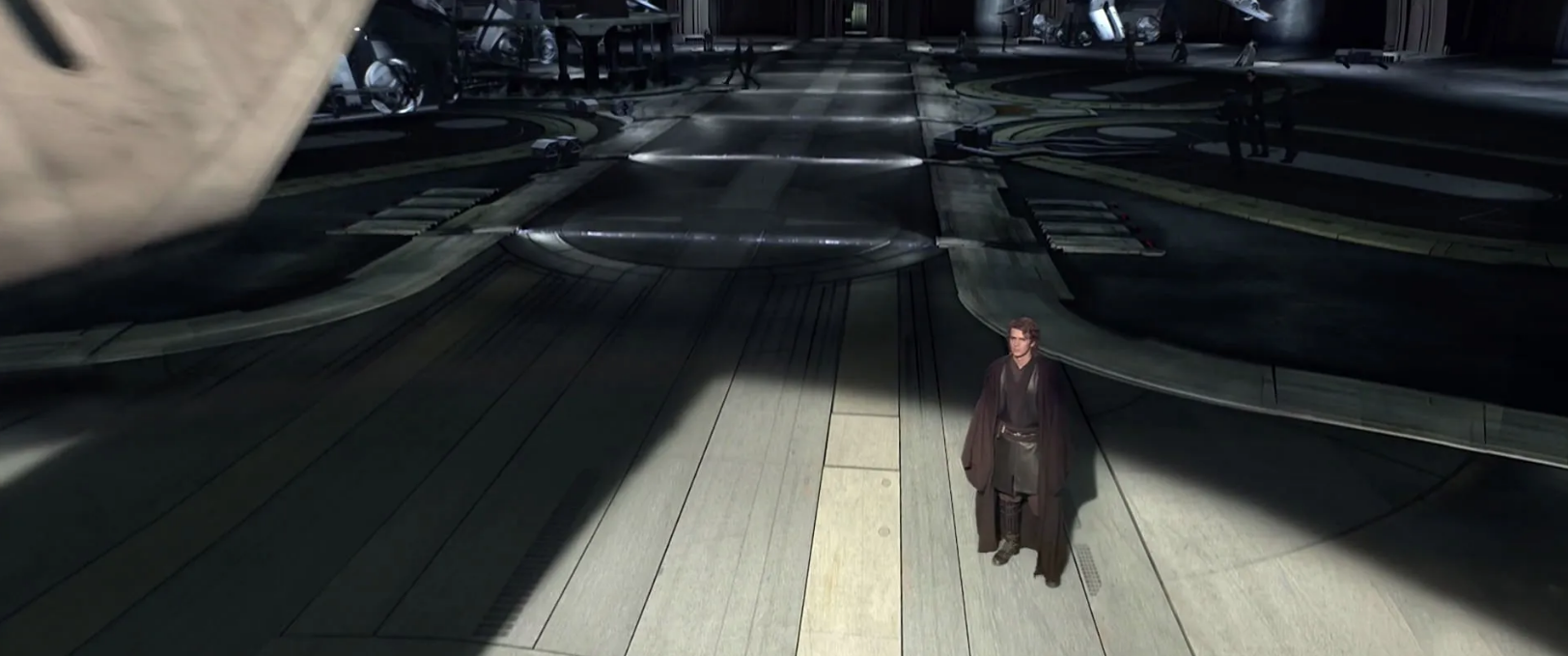
Is there any more potent way to evoke Anakin's isolation and loneliness than this shot, making him so small and bereft?
I appreciate that Lucas tweaked this sequence when it became clear that Anakin's motivations for turning weren't coming across as clear as he wanted. The silent exchange between the Council chamber and Padmé's apartment is exactly what we needed. And what a showcase of his artful use of cinematic language. Padmé and Anakin's shots are set up in mirrored parallels. A wide shot of her room and a close up of her face, followed by a wide shot of the chamber and a close up of his. Framed as if they're looking at each other even across the vast city. We need no dialogue, no complex explanations. While the eerie, mournful music heightens, we see these two fall into sync like two halves of a beating heart.
Here's just a few examples. (I would include every shot, but darn it all if I'm not running out of space for my images. I can't imagine why; I've only posted several hundred...)

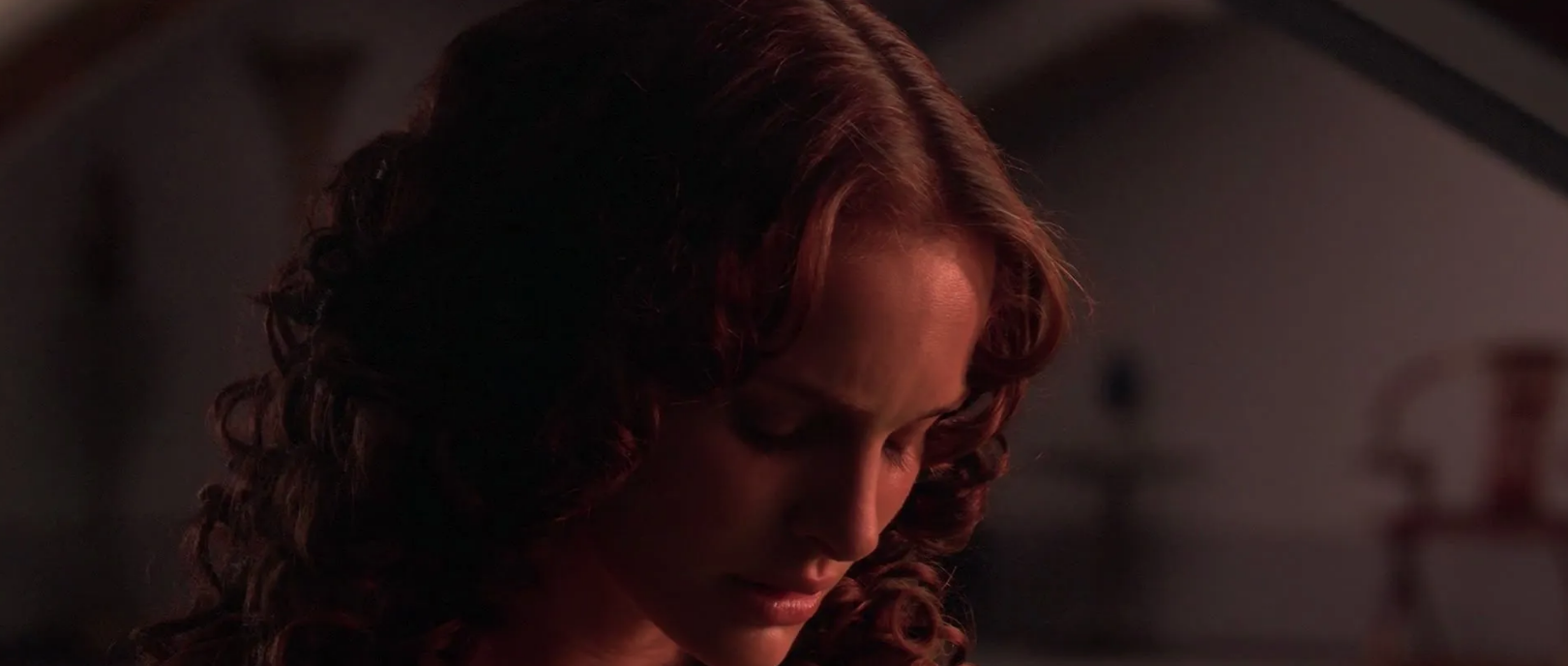

In the end, when Anakin disobeys Windu's order and runs to meet his awful destiny, we know exactly what motivation lies at the heart of his decision. And all without a single word.
Next, a fateful duel...


no subject
Date: 2024-03-22 12:21 am (UTC)no subject
Date: 2024-03-22 11:43 am (UTC)no subject
Date: 2024-03-22 09:45 pm (UTC)Actually, after leaving my first comment I did think of something else springing from your post. I have to admit it's "story-focused" rather than "visual-focused," but your comment at the beginning about Mace's significant error reminded me of how some people have pointed out he casually mentioned "if your apprentice is the Chosen One" to Obi-Wan in Episode II, but in this movie he seems much cooler on the subject. The "the Jedi were right" crowd (I suppose I can see their point that "in this hypothetical fictional case unusual restraint may be justified in the story", but at other times their certainty can irk me a bit) seem to have looked for examples of Anakin beginning to seem unworthy of a grand mantle, and while his response to the compromise about putting him on the Jedi Council might apply I did also wonder if Mace is just now so focused on the Clone Wars that he's got no time to care about grand prophecies.